
Catching OpenSlice in the Wild: Discovery of Patras5G
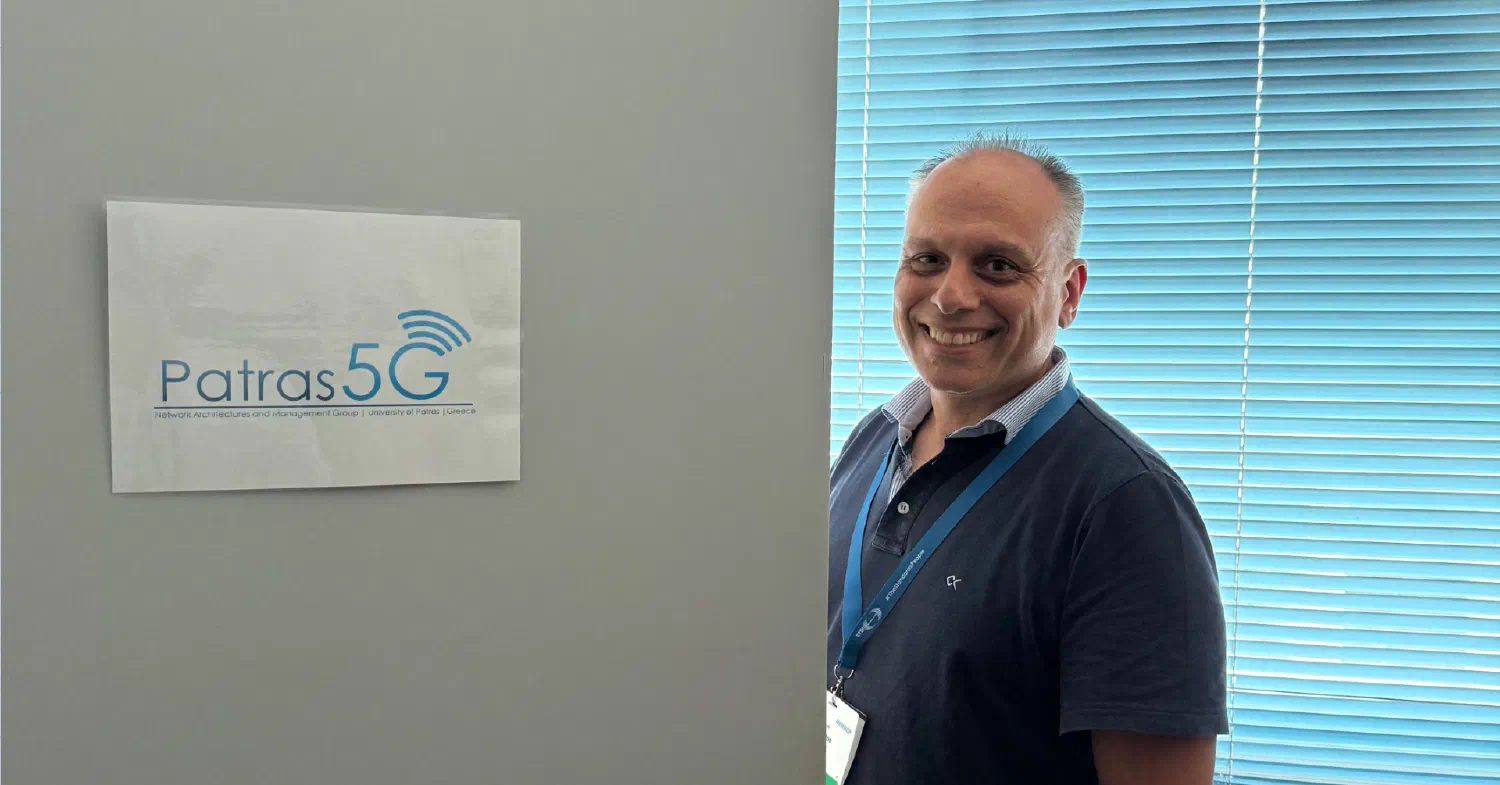
Collocated with the OSL#9 Plenary Meeting, the OSL#9 TECH Day gave attendees the opportunity to discover the ECE Department of the University of Patras, which hosted both meetings and opened its doors to reveal the many (not so) secrets hidden throughout the campus.
University of Patras has been in the Leadership Group since the inception of SDG OpenSlice, and in the Technical Steering Committee, but their involvement in this initiative did not start in 2023. Before that, as per our history, UoPATRAS was at the forefront of this project, with parts of it dating back to 2018 in the scope of 5G-VINNI, an EU-funded project.
For this first time of UoPATRAS hosting an OpenSlice meeting, the TECH Day was born to disseminate the efforts put in place by the ECE department into testing and actually dogfooding the software they contribute to, by running it on-site for their private 5G network: Patras5G.
The Patras 5G facility is an “isolated” non-public network for 5G and IoT applications that adopts the Network as a Service (NaaS) delivery model, whereby the facility provisions tailored network slices to verticals upon request. Each vertical uses the slice that has been provided to meet their requirements for trialing activities, setting up different use cases and assessing their KPIs under different network conditions.
If this sounds familiar, that’s because it’s what OpenSlice does. Patras5G runs a 5G core and private 5G deployments built entirely on open source components. These include OpenSlice as the service orchestrator, as well as Open Source MANO (OSM), an ETSI Software Development Group (SDG), for NFV management. Cloud-native workloads are also supported through direct Kubernetes deployment and management. In this setup, OpenSlice handles service orchestration, while OSM and Kubernetes manage the underlying NFV and cloud-native orchestration layers, respectively.
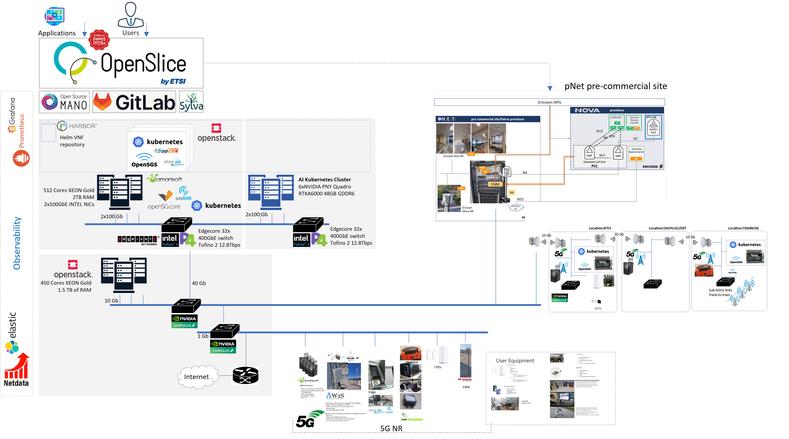
Access to the network by users and applications is enabled through OpenSlice. Vertical applications can manage and onboard their artifacts through the facility’s user-friendly portal, or programmatically access the available services via the exposure of CAMARA APIs as-a-Service. The Service Catalogue is easily accessible through the site portal. An API collection, adhering to the TMForum OpenAPIs standard, provides comprehensive management of the various artifacts, covering the Service Catalog, Service Order and Service Inventory, Partner and User Management, and Service Orchestration, among others.
Telemetry and monitoring are provided through Prometheus, offering comprehensive metrics on cloud infrastructure, VNFs, and RAN nodes, as well as energy consumption measurements from compute nodes, switches, 5G gNBs, and CPEs — all securely gathered in a Prometheus server. Prometheus is paired with Grafana for monitoring, while Elasticsearch and Kibana handle data collection and visualization.
On the infrastructure side, the deployment offers a private 5G network for testing and experimentation, operating on both licensed and unlicensed spectrum with its own SIM cards, built on 5G standard-conformant components and core network infrastructure. mmWave backhaul links connects access points across the city of Patras to the core network, complemented by Fixed Wireless Access for broadband connectivity throughout the facility.
The testbed integrates multiple open source and commercial 5G cores with SDR platforms, user requirement (UEs), and g/eNB base stations, supporting end-to-end deployment of customized slices across the entire network — access, transport, and core. This includes slicing capabilities extending to IoT devices at the network edge. It also supports MEC orchestration and mobility management features for interactive mobile streaming edge services, and operates under an Academic License granted by the Greek government for use of licensed spectrum.
The Patras 5G facility is co-administered with p-NET, which hosts a next generation networks pre-commercial site, based on ERICSSON 5G Rel-17 and beyond equipment. The site provides multiple radio units, an edge User Plane Function (UPF), and a dedicated slice operated by the Greek operator NOVA. Additionally, it offers substantial compute capacity, including carrier-grade GPUs for AI workloads. This extension enables experimentation with 5G and emerging 6G cloud-to-edge scenarios, as well as various non-public network deployments, using NOVA’s licensed spectrum. More in-depth technical details can be found on the Patras 5G Wiki.
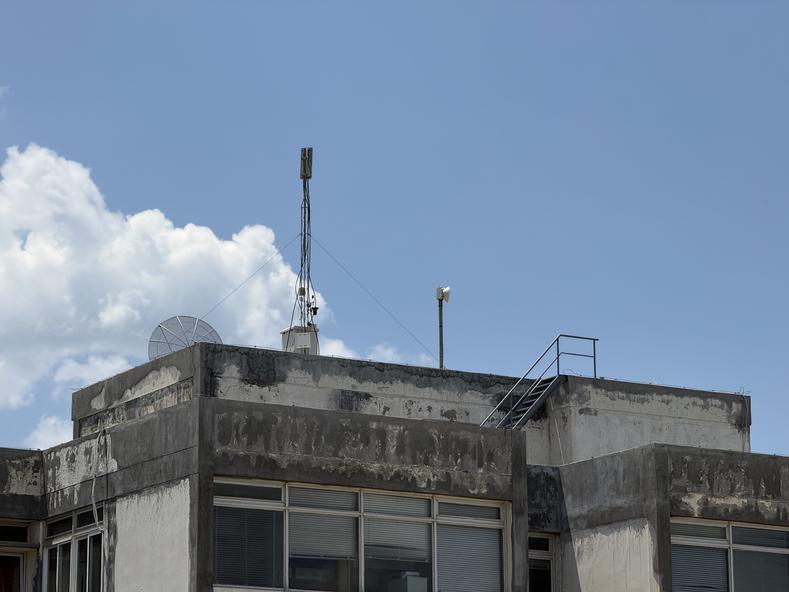
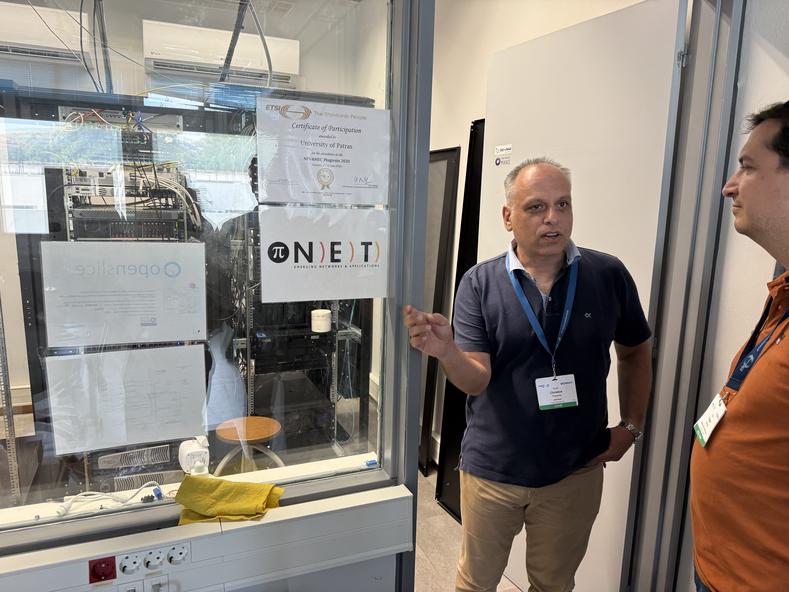
It’s touring the server room, and the antenna deployments outside and inside — but also the roof, offering a technologically inconsequential but superb view of the mountains — that gave attendees a glimpse into what it takes to operate and run a private network like this one, and how their efforts, put into OpenSlice, translate into usable, interoperable and actionable software providing connectivity across parts of a large campus — and hypothetically more, in other places of the world.
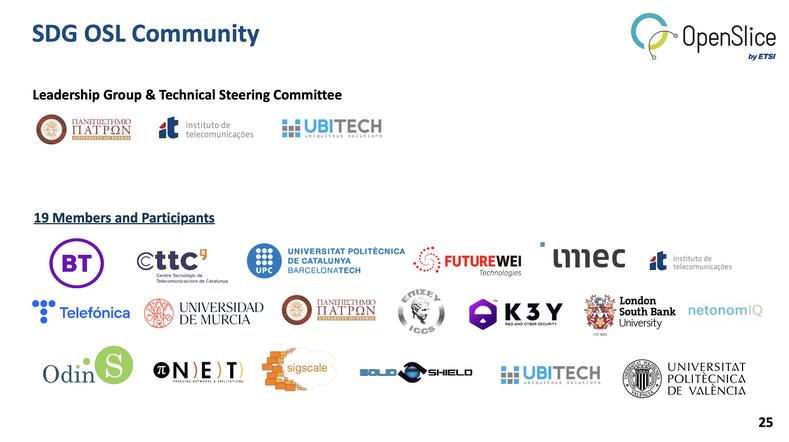
Nowadays, OpenSlice, having gained some maturity and proven itself in the wild, is far from a proof of concept, and is used by known organisations (but also many unknown, per open source concepts and the resulting lack of invasive telemetry). Some have started to commercialise the solution — for example, NetonomIQ, a spin-off from the University, which also presented during our TECH Day a demo on Agentic Test-Driven Quality Assurance for 6G Networks - Demo Overview.
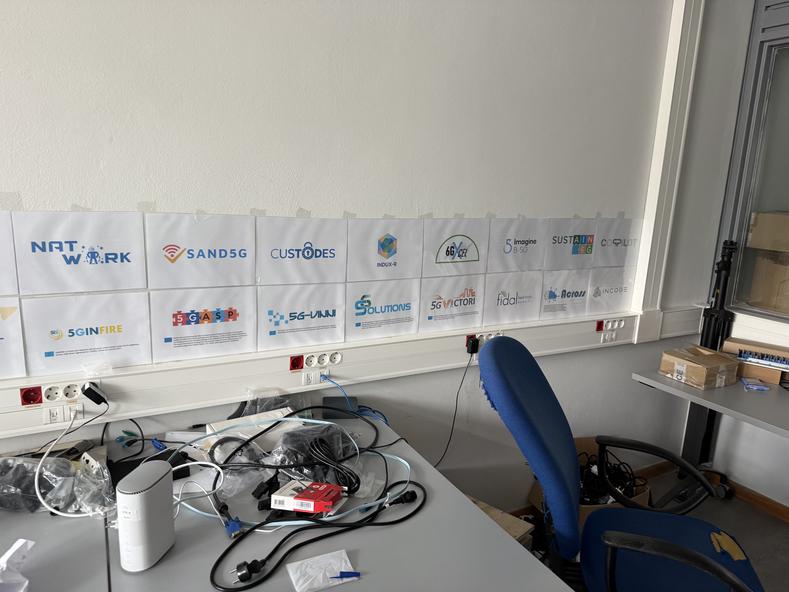
With this, we conclude this short post on the outcomes of our TECH Day in Patras. We hope on-site attendees came away with a meaningful glimpse into this deployment, and that our readers got a good recap of the experience as well.
Huge thanks again to Christos Tranoris and Kostis Trantzas for hosting this enriching day and being great hosts to the attendees on site!